
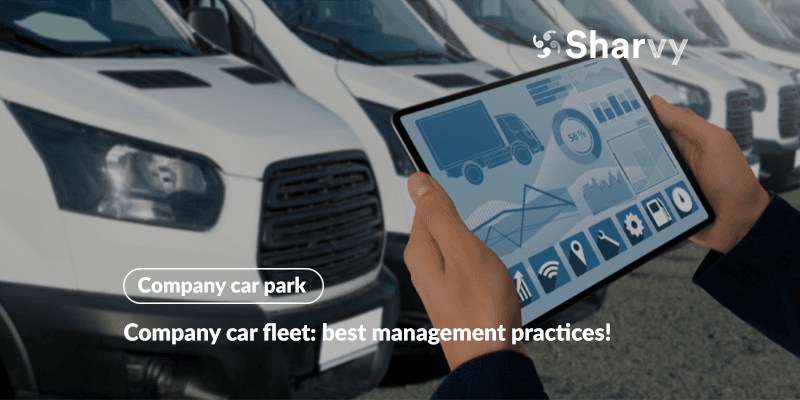
Is your company car fleet really heading in the right direction?
With soaring fuel costs, digitalisation and environmental pressures, how can you stay on course? Should you electrify, pool resources or automate? Today, it is no longer enough to simply manage your fleet. You need to manage your company car fleet intelligently.
Because behind every car, there are costs to control, of course. But there are also employees to support and objectives to achieve. So how can you reconcile savings, efficiency and environmental responsibility without losing agility?
The answer can be summed up in one sentence: adopt best management practices. In this article, discover concrete methods to make your fleet more efficient, more sustainable and, above all, better suited to today’s challenges.
A reminder of the challenges of company car fleet management.
↪ Major financial challenges.
The first challenge is, of course, cost. Acquisition, maintenance, fuel, insurance and taxes represent a significant portion of a company’s expenses. Every decision, from the choice of car to how it is financed, has a direct impact on profitability.
To stay in control, it is essential to monitor the total cost of ownership (TCO). This indicator encompasses all expenses related to the life of the car and helps identify areas for savings: reducing fuel consumption, optimising maintenance contracts, reviewing insurance conditions, and adjusting the size of the fleet.
A well-managed fleet is therefore not just an expense item: it is also an opportunity for profit. By adopting a strategic, data-driven approach, the company can generate financial margins while improving service quality and employee satisfaction.
↪ Unavoidable human challenges.
Behind every car, there are also people. Sales representatives, technicians, delivery drivers, travelling executives, etc. They all depend on a well-managed fleet to carry out their work. That is why the human dimension must be at the heart of the strategy.
Driver safety, comfort and satisfaction are obvious priorities, but another factor is often underestimated: fairness. Fleet managers must ensure that injustices are limited and that everyone has fair access to resources: car allocation, access to car park, charging stations, replacement cars, etc. These seemingly minor details can quickly become sources of tension if management lacks clarity.
A transparent and consistent policy helps to avoid frustration and strengthen cohesion. The rules for allocation, use and priority must be explicit, but also shared with all employees. Nothing fuels demotivation more than a system that is perceived as unfair and opaque.
↪ Growing environmental challenges.
It is difficult today to talk about car fleets without addressing the environmental dimension. Energy transition is no longer just a talking point; it is a reality that must be integrated into corporate strategy. A fleet’s carbon footprint has become a key performance indicator, just like costs and safety.
Reducing emissions therefore requires several levers: gradually renewing the fleet with hybrid and electric cars, rethinking commuting to limit unnecessary mileage, and providing training in eco-driving. These actions, which may seem simple, have a direct impact on CO₂ emissions, fuel consumption and car sustainability.
Finally, adopting a cleaner fleet also means involving employees in a meaningful mission. By facilitating alternatives such as carpooling and soft mobility, the company strengthens its environmental commitment while improving its internal culture.
So, what are the best management practices for your company car fleet?
1. Establish a clear and fair car policy.
This is the basis of good fleet management. It should define the rules of the game : criteria for allocating vehicles, conditions of use, maintenance monitoring, claims and fines management, etc. This clear framework helps to avoid misunderstandings and ensures transparent communication between you (the fleet manager) and your employees.
But beyond the administrative framework, your car policy must above all embody a culture of fairness and respect.
- Who is entitled to a company car?
- How are parking spaces allocated when they are limited?
- Should certain charging stations be reserved for electric cars?
- How should access to replacement cars and shared cars be managed?
- What criteria should be used to determine priority of use in the case of a limited fleet?
- How can the needs of mobile and sedentary employees be balanced?
- Are the rules clear enough to avoid frustration?
These choices, which can sometimes be delicate, have a direct impact on the cohesion of your teams and the perception of fairness within the company.
When your employees understand the rules and know why they exist, you create a climate of trust. Conversely, a vague policy that is perceived as unfair generates frustration, disengagement and sometimes even misuse of vehicles.
↪ Our practical advice to note:
- Clearly communicate the allocation criteria and procedures to be followed.
- Define objective priorities for parking spaces and vehicle access.
- Document the procedures for the use of replacement and shared vehicles.
- Digitise management via a dedicated application, such as Sharvy.
- Measure internal satisfaction: a survey can reveal areas for improvement.

2. Choose the right financing method for your car fleet.
Buy, lease, or opt for a long-term rental (LTR)? Each solution has its advantages and constraints. There is no one-size-fits-all formula. The choice depends above all on your company’s needs and your financial strategy.
- Buying offers complete freedom: you decide on the model, maintenance and renewal schedule. But beware, it ties up capital and generates depreciation and maintenance costs that need to be anticipated.
- Leasing allows you to spread your expenses and renew your fleet more easily, while reducing the risk of depreciation. It combines flexibility and budget control, but involves strict conditions on usage, such as mileage.
- Long-term rental is attractive because of its simplicity and predictability. In most cases, everything is included: maintenance, insurance, assistance, etc. This makes day-to-day management easier. However, the choice of vehicles is often more limited and there is less flexibility than with purchasing.
The key factor in making the right choice is the total cost of ownership (TCO): fuel, maintenance, insurance, taxes, depreciation, etc. Every pound counts. A rational decision is based on a precise analysis of these costs over time, rather than on intuitive preferences or habits.
↪ Our practical advice to note:
- Compare the TCO of each option before making a decision.
- Take your actual needs into account: mileage, type of journeys, intensive or occasional use, etc.
- Negotiate contracts: insurance, maintenance & services included, etc.
- Regularly review « » the model you have chosen: what was suitable three years ago may not necessarily be suitable today.
3. Monitor the right performance indicators.
To manage your fleet effectively, you need to rely on reliable data. KPIs tell you what is working, what is too expensive and where action is needed. The most useful ones are:
- Total cost of ownership (TCO): this indicator combines purchase, maintenance, fuel, insurance and depreciation costs. It allows you to measure the true cost of each car over its lifetime.
- Utilisation rate: this reveals whether your car fleet are under-used or, on the contrary, over-used. This helps you adjust your fleet and optimise resources.
- Average fuel consumption: essential for controlling your fuel budget and identifying the least economical cars.
- Accident rate & incident tracking: accidents, fines, repairs, etc. This data is crucial for anticipating risks and improving driver safety.
These indicators are not just for reporting: they guide your decisions, detect waste and help you plan renewals, such as car redistribution.
↪ Practical tips for using your KPIs effectively:
- Collect and centralise data via a dedicated application.
- Analyse regularly (monthly and quarterly dashboards).
- Set clear objectives: reduce TCO and consumption, and improve usage.
- Communicate the results to your teams for greater transparency.
- Take swift action on any KPIs that give cause for concern.
Sharvy: the essential tool for optimising your company car fleet management.
As a fleet manager, you juggle car allocation, booking slots, limited parking spaces and the specific needs of your employees on a daily basis.
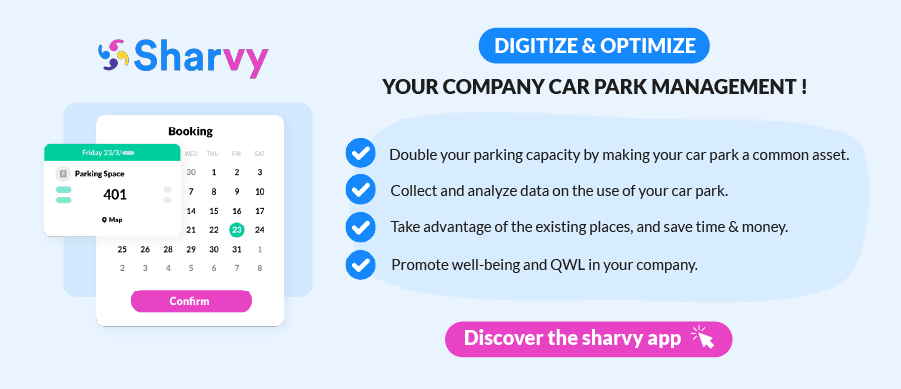
Sharvy simplifies all these constraints. With the app, you can define who has access to which car, track fleet availability in real time and automate the allocation of cars and charging stations, all in a fair manner.
Your employees gain autonomy, while you maintain a clear and accurate overview of each car usage.
Detailed dashboards and reports allow you to track key KPIs such as occupancy rates, access control, number of incidents, etc., and anticipate needs such as adjustments to the fleet.
In conclusion
Mastering best practices in fleet management is not just about following rules and indicators: it’s about thinking of your fleet as a real strategic lever. It’s about anticipating needs, streamlining organisation, and creating simple and fair processes that strengthen cohesion.
By implementing this proactive approach, you can transform your fleet into a tool that enhances operational efficiency, optimises costs and supports your company’s overall performance.
Any questions? Check out the following FAQ!
Why is it important to digitise the management of your car fleet?
Using a dedicated application, you can track all your cars in real time, view their availability, manage bookings and automate alerts for servicing, MOTs and maintenance.
Digitalisation also allows you to collect and analyse reliable data: car utilisation rates, booking rates, access management, car park occupancy rates, number of incidents, etc. This information becomes key indicators for managing your fleet, identifying inefficiencies and anticipating future needs.
Finally, it simplifies communication with your employees. They can easily reserve a car, find out which slots are available and comply with the established rules, which reduces conflicts and improves satisfaction.
What are the concrete benefits of optimised your car fleet management?
A well-managed fleet reduces unnecessary costs, optimises car usage and streamlines operations. Employees benefit from fair access and suitable cars, which increases their satisfaction and commitment.
What’s more, by streamlining travel and integrating sustainable solutions, you reduce your environmental footprint while transforming your fleet into a real performance lever for the company.
Want to learn more? Check out our latest articles to stay up to date!
The future of company car park badge systems : integrating AI & IoT?
How are AI & IoT revolutionising badge systems for company car parks? Towards simpler, more secure and connected access.

The impact of teleworking on companies and their car parks !
What impact does teleworking have on the organisation of companies and the use of car parks? A full analysis of the issues!
8 misconceptions about company car park management (and why they’re wrong)!
Discover 8 misconceptions about company car park management and learn the truth to optimise your parking management!
Subscribe to our newsletter!
PARKING & WORKPLACE MANAGEMENT SOLUTION
Car park management - Charging points monitoring - Desk booking - Booking by time slots



LABELS & COMMUNITIES




SUBSCRIBE TO THE NEWSLETTER
Receive the latest Parking & Workplace trends by email once a month.

